Philip Thorpe
Strategic Migration and Protection Specialist
I am an independent practitioner and researcher with over 20 years of global experience across migration, displacement and protection, gained within government, the UN system, and the I/NGO/charity sectors. This gives me unique insight into migration challenges and solutions. I combine senior level diplomatic influence and institutional leadership with deep field experience and front line credibility. My technical expertise spans migration governance, refugee response, asylum systems, and trauma-informed approaches.

areas of expertise
Refugee response and asylum systems
Migration governance and policy mainstreaming
Displacement, sanctuary and belonging
Organisational learning, training and capacity building
Safeguarding and trauma‑informed practice
Mixed methods research and evidence based policy
Stakeholder engagement, coalitions and strategic advocacy
Process optimisation and operational improvement
Consulting

My consultancy practice draws on two decades of work across migration systems to help organisations and authorities make sense of complex challenges. Having worked in many contexts and at every level of responsibility, I bring a mix of operational, political, community and research perspectives that shape practical and evidence based support and advice.I assist anyone with responsibility for migrant populations to make sense of challenges, design workable solutions and strengthen their responses in ways that are ethical and rooted in real experience.To discuss your project, practice or ideas, please get in touch. I offer initial scoping calls free of charge.
key services
Strategic advisory including institutional reform, migration mainstreaming and programme design
Systems strengthening including governance reviews, evidence‑based policymaking, multi‑country research, systems reviews and data analysis
Capacity development including needs assessments, technical training and curriculum design
Funding acquisition including donor engagement, proposal development and donor reporting
client portfolio
migrant voices collective (MVC)
Research and insight on migration and integration
about us
We are a practitioner academic consortium dedicated to ensuring that migrant experiences shape the decisions that affect them. We support UK organisations facing rising demand and limited resources through co‑created, humane and practical solutions that strengthen local systems and improve outcomes for individuals and the communities within which they live.
current commissions
Supporting a UK university to review its sanctuary annual report and plan
Partnering with multiple UK local authorities on enhancing sanctuary provision
Collaborating with a UK local authority on improving No Recourse to Public Funds (NRPF) response
Co‑creating communication and information‑sharing tools with migrant communities
Working with a UK local authority to develop a sanctuary accreditation application resulting in a successful award
Social research study on the impact of migration on statutory and non statutory service use
"This independent research from MVC has strengthened our understanding of the needs of refugees and asylum seekers and provided a valuable evidence base to inform service delivery."
Carys Alty, Head of Migration & Partnerships, Oxfordshire County Council
work with us
If you are interested to hear more about MVC or would like our support with your own project or operation, please let us know.
cradling hope
Narratives of home, sanctuary, and belonging in displacement between hostile environments
A practitioner led academic study of asylum in contemporary Britain
A system under strain, and the hope held within it
Britain’s asylum system is overwhelmed. Years of reactive policymaking, rising global displacement, and inconsistent operational capacity have created a landscape where no one is well served. Communities feel the strain, practitioners face burnout, and people seeking sanctuary are left in prolonged uncertainty. The system costs billions, yet delivers outcomes that are often neither humane nor effective. And yet, inside this system, there is wisdom, resilience, creativity, and hope.Cradling Hope is a practitioner led study that asks what sanctuary looks like when we move beyond crisis management and political point scoring, and instead listen closely to the people who live and work within the system every day. It brings together two decades of frontline and strategic experience in migration and protection with the insight of displaced communities, practitioners, and sanctuary networks across the UK.A central part of this work is the artistic expression of displaced people. Across Britain, migrants use art, literature, music, and creative practice to make meaning, tell their stories, recover from trauma, and rebuild a sense of home. These creative forms, observed by practitioners who work with displaced people on a daily basis, reveal truths that statistics and headlines cannot. They offer a different way of seeing displacement, one rooted in agency, recovery, identity, and belonging.Cradling Hope aims to surface these human stories and practitioner insights to challenge the persistent negative narrative that dominates public debate. Instead of the usual accounts shaped by policy makers, media reporting, or cherry picked data, this project paints a picture from the ground up: from the people navigating the system, and from those supporting them every day.This research seeks to offer grounded understanding, practical possibilities, and a more human account of what it means to seek safety in contemporary Britain. It aims to tell a story that speaks louder than the noise around it, a story of belonging, constraint, creativity, and the fragile but persistent hope that people carry with them as they rebuild their lives. Because it aims to change perceptions of displacement, and tell a more honest story, it cradles hope.
words from our supporters and community of practice
"Cradling Hope addresses an issue of real importance at a time when conversations about displacement in the UK have become increasingly strained. Its focus on narrative, lived experience and the human realities behind forced migration feels both timely and necessary. Drawing on Philip Thorpe's many years of frontline and strategic work in refugee protection, the project aims to contribute to a more informed and humane public understanding of sanctuary and belonging. I am pleased to support this thoughtful and much‑needed initiative."
Charlie Maynard MP, Shadow Chief Secretary to the Treasury and Member of Parliament for Witney
"We warmly endorse the 'Cradling Hope' research project. At a time of increasing hostility, this project’s focus on using creative expression and practitioner insight to reframe the narrative around displacement will offer crucial insights into how we can strengthen local integration infrastructures and ensure that the voices of displaced people remain at the heart of collective welcome."
Rosie Tapsfield, Director of Operations at City of Sanctuary UK
"The Refugee Employment Network is pleased to support the Cradling Hope research project. At a time when refugee and displaced talent remains significantly underutilised across the UK labour market, this research highlights both the barriers individuals face and the wider social and economic value lost when people are unable to fully contribute their skills, experience and potential. By focusing on how we can unlock these barriers, this research offers crucial insights into building the trauma-informed employment pathways needed to let refugees thrive and contribute fully to their new communities, to the benefit of all of us."
Jenny Walton, Chief Executive at REN - Refugee Employment Network

"Having worked alongside Philip Thorpe over several years on refugee employment pathways and on supporting employers to become ‘refugee ready’ in the UK, I have seen first‑hand that his approach is consistently thoughtful, ethical and grounded in a deep understanding of the realities faced by displaced people. Given his extensive experience in the field and deeply consciencious attitude I highly recommend Philip in all his professional endeavours.Cradling Hope reflects the same commitment. By combining narrative, creative practice and practitioner insight, it offers an important contribution to how we understand displacement in the UK."
Werisha Husaini, Refugee Employment Specialist at International Rescue Committee UK
A system not fit for purposeAcross Britain, practitioners, local authorities, and community organisations are working within an asylum system that has not kept pace with the scale or complexity of contemporary displacement. Years of shifting legislation, inconsistent operational capacity, and short term decision making have created a landscape where delays are normal, support is fragmented, and people are left in prolonged uncertainty.Practitioners describe a system that often feels chaotic. Long waiting times, sudden policy changes, limited access to legal advice, and overstretched accommodation providers shape the daily realities of those seeking sanctuary. These pressures also affect the people supporting them, contributing to burnout, moral distress, and organisational strain.Cradling Hope examines how these structural pressures are experienced on the ground. It looks at how practitioners navigate the gaps, how displaced people cope with prolonged instability, and how local networks attempt to create continuity and care within an environment that frequently undermines both.

Understanding these pressures is essential. Without acknowledging the structural realities that shape people’s lives, it is impossible to build humane, effective, and sustainable approaches to sanctuary. This research aims to illuminate these realities not to assign blame but to support more grounded, evidence based conversations about what a functioning system could look like.Why understanding matters nowThe pressures facing the UK asylum system are not abstract. They shape the lives of displaced people, the work of practitioners, and the tone of public debate. At a time of rising global displacement and a system struggling to cope, the need for clear and grounded understanding has never been greater.Yet the national conversation often shows how little is understood about the people who seek protection and the purpose of the asylum system itself. Public language, from political speeches to protest slogans, frequently reduces complex human realities to simple claims that do not reflect the truth. People are spoken about as threats, burdens, or statistics rather than as individuals rebuilding their lives in difficult circumstances. The system is described in ways that bear little resemblance to how it actually functions on the ground.This gap between perception and reality has consequences. It fuels hostility, shapes policy decisions, and undermines the possibility of humane and effective responses to displacement. It also places additional strain on practitioners and communities who work every day to support people through a system that is already under immense pressure.Cradling Hope responds to this moment. By bringing together practitioner insight, lived experience, and creative expression, it aims to deepen public understanding of who seeks sanctuary in Britain, why they come, and what the asylum system is meant to do. It seeks to replace noise with clarity and assumption with evidence so that conversations about displacement can be rooted in truth rather than fear.
Artistic expression and meaning makingCreative expression is a vital part of how many displaced people make sense of their experiences. Through art, writing, music, and other forms of creativity, people rebuild identity, process trauma, and hold on to a sense of self during long periods of uncertainty.Practitioners see this every day. They witness how creativity opens conversations that would otherwise remain hidden and reveals truths that case files and statistics cannot capture. But also how art and expression speak accross culture and language barriers and the power they have to change perceptions.Cradling Hope places this creative work at the centre of its inquiry. It treats artistic expression as a source of knowledge about displacement, resilience, and belonging, and brings it into dialogue with practitioner insight and lived experience to show a fuller, more human picture of sanctuary in Britain.
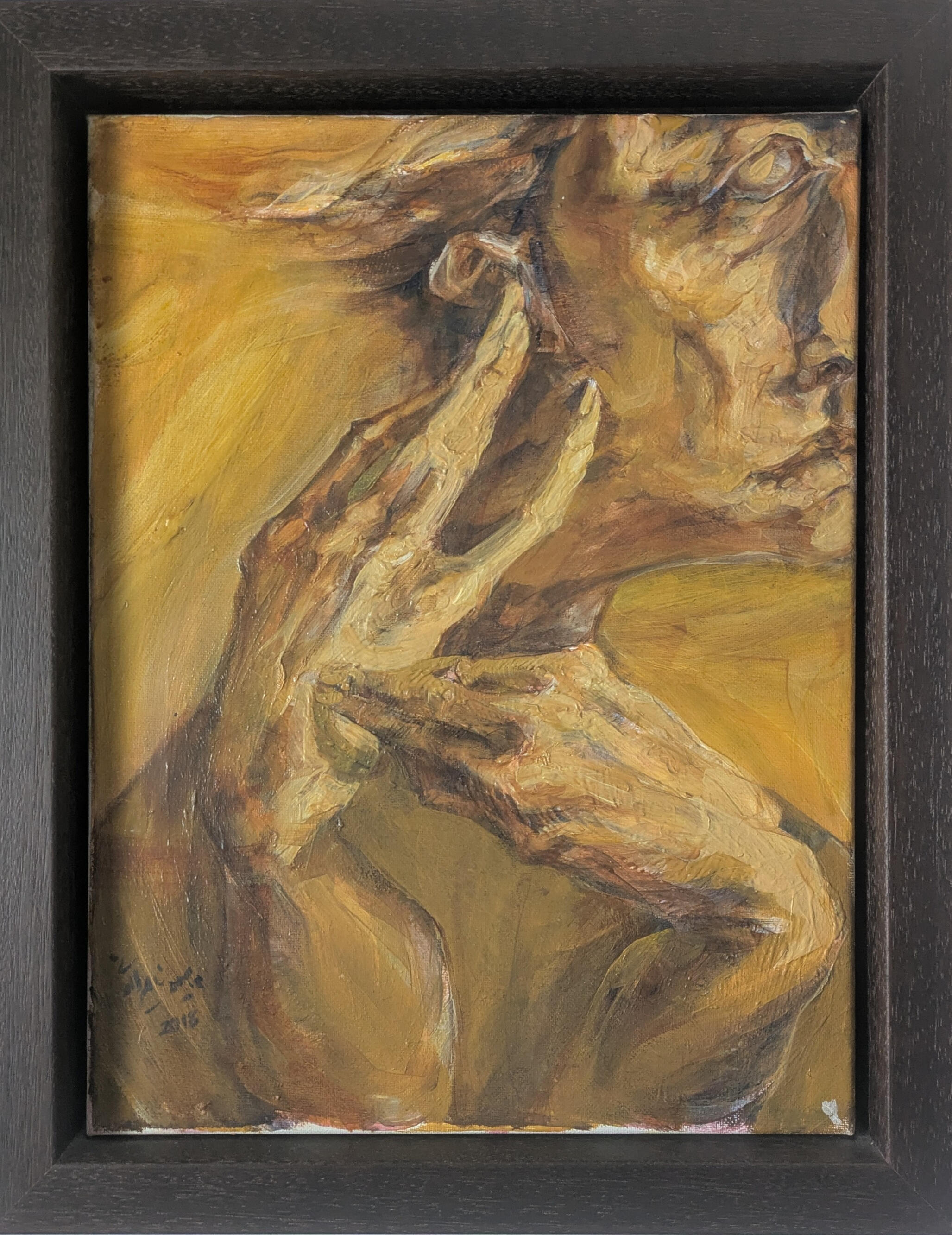
Syed Mostafa Seyyed Naser al-Dini, Untitled, 2018
how to support the project
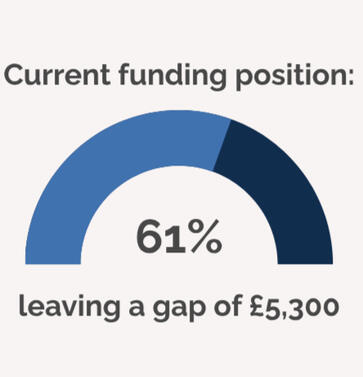
Cradling Hope is self‑funded with generous external support, but further contributions will allow the project to be delivered in full. Supporters are welcome to contribute at any level, and every contribution directly supports research activity, fieldwork, travel, participant support, creative outputs and events, and the time needed to carry out the work with care and integrity.Work on sanctuary, asylum and displacement increasingly sits within a politically contested space, which makes it difficult for large institutional funders to support practitioner led projects of this kind. As a result, grounded and humane work often depends on coalitions of smaller supporters who value evidence, lived experience and practical improvement. Cradling Hope is shaped with this reality in mind.Direct donations are welcome, but funds can also be held securely in an Oxford Brookes University account and managed through standard university financial controls. This provides a safe and transparent way to contribute, with a clear audit trail for all expenditure. This structure ensures that support for the research is practical, accountable, and aligned with the values of the study. It allows partners to invest in work that is grounded, humane, and focused on real improvement in the asylum and protection system - to cradle hope.
What Supporters Receive
This approach creates a collaborative funding coalition who want to support practitioner led and evidence based work on sanctuary and protection in contemporary Britain. It offers a shared space for learning, reflection, and co creation, shaped by the insight of practitioners and communities. All contributions help build a clearer and more human understanding of how sanctuary is created and experienced in the UK.In return supporters receive:
Tailored content such as training sessions, talks for staff or clients, and practical input on migration and protection work
Invitations to research workshops and exhibitions
Early access to findings and creative outputs
Opportunities to shape areas of focus through dialogue & feedback
Recognition within the programme
further information and support
If you would like to learn more about Cradling Hope, explore the prospectus together, or discussing funding, you are welcome to get in touch. The project values collaboration and is always open to conversations with practitioners, organisations, and individuals who want to strengthen understanding of sanctuary and belonging in Britain.You can connect, share ideas, or support the work using the links below.
Add the research pages as a favourite by scanning the QR code below:

Contact
Get in touch to discuss how we can work together. You can also connect or set up a free scoping call to discuss your project ideas using any of the buttons above.
Connect with me here

Thank you for your message
I usually reply within 24 hours